Mozambican Elections 2009

Saturday, August 28, 2010

Tuesday, June 15, 2010
The Vuvuzela

With all the excitment that comes with the World Cup 2010 in South Africa, I constantly hear the rather abnoxious sound of the Vuvuzela. This brightly colored plastic horn has become the unofficial symbol of the World Cup. When thousands of these horns are being played at once in the stadium, it sounds like "a swarm of angry wasps".
For more interesting facts about the vuvuzela, visit http://news.bbc.co.uk/2/hi/africa/10312794.stm
 The World Cup has provided individuals across the continent of Africa, from Cairo to Cape town, with a sense of unity. This is especially true now as Ghana is representing the entire continent. It is rather exciting to be able to say that I visited the stadium as it was being constructed when we were in Johannesburg, South Africa!
 The World Cup has provided individuals across the continent of Africa, from Cairo to Cape town, with a sense of unity. This is especially true now as Ghana is representing the entire continent. It is rather exciting to be able to say that I visited the stadium as it was being constructed when we were in Johannesburg, South Africa!
 Wednesday, May 5, 2010
Unveiling of the Presidential Portrait of Irvin D. Reid
Today I had a chance to witness the unveiling of the portrait of Dr. Reid in the Irvin D. Reid Honors College. Under Dr. Reid's administration, the Wayne State University Honors Program was able to establish itself as a College, the same college from which I will graduate!


Wednesday, April 28, 2010
UK Elections 2010
The Mozambican elections of 2009 really sparked my interest in elections. Much of the media these days is focused on the upcoming general elections in the United Kingdom, so with the help of a friend studying constitutional law in the UK, I was able to further understand the British electoral system, as well as the structure of Britain's parliament, and the role of the European Union.
The British Electoral System
The First Past the Post System Determines the House of Commons (Erin Britton)
British Members of Parliament are elected to the House of Commons through the First Past the Post system. The electoral system used through Britain is the single member constituency with simple majority, better known as the First Past the Post system.
The Mechanics of First Past the Post
For the purposes of general elections, Britain is divided up into single constituencies. Each party who wishes to contest the constituency (also known as a seat) must put forward one candidate or representative to stand. Each voter in the constituency then has one vote which they can cast for the candidate or representative of their choice. The candidate with the largest number of votes is elected as the Member of Parliament for that constituency. The party which has the greatest number of elected Members of Parliament then generally forms the government.
The Advantages of the System
As far as electoral systems go, the First Past the Post system is relatively simple and easy for voters to understand. It is also an inexpensive system to run and its simplicity means that a result can be produced fairly quickly. Since each constituency elects only one representative, that person is easily identified with a particular area and voters know who to approach when they have a problem. The First Past the Post system tends to lead to one party gaining a majority in the House of Commons and so voters know which party will form the government and so what policies to expect.
The Disadvantages of First Past the Post
The First Past the Post system is a far from perfect electoral system and, in fact, 5 main disadvantages can be identified:
1. Since the winning candidate needs only to secure a simple majority, it is possible that more people in total may have voted for other candidates than the winner.
2. A party which regularly comes second or third in the constituency votes but that wins very few outright can find themselves with a very high percentage of the total vote but relatively few seats.
3. It is theoretically possible that the party which forms the government may actually have won fewer total votes that their nearest rival.
4. Since there is no uniform number of voters in a constituency, the winner in a small constituency can have received fewer votes than the runner up in a larger constituency.
5. A number of constituencies are considered ‘safe’ for particular parties. In such cases, voters who do not support the dominant party may feel that there is no point voting at all.
It is important to remember that all electoral systems have some disadvantages and in Britain, where tradition has dictated the use of the First Past the Post system, the advantages of the current system are thought to outweigh the disadvantages.
References:
McLean, I. and McMillan, A. (2003) The Concise Oxford Dictionary of Politics (2nd Rev Ed.) (Oxford University Press)
Jones, B. et al (2006) Politics UK (6th Ed.) (Longman)
Kingdom, J. (2003) Government and Politics in Britain: An Introduction (3rd Ed.) (Polity Press)
The British electoral system is based on the "First-Past-The-Post" (FPTP) system. In recent years, reforms have occurred in places such as Northern Ireland where a form of proportional representation has been used in elections and in the devolution elections surrounding Scotland and Wales. However, for the most part, Britain has used the tried and tested FPTP system.
In the past, this system and the whole structure of elections, created absurd anomalies with the existence of "rotten boroughs" such as Old Sarum, Dunwich and Gatton. Old Sarum was by local reckoning "one man, two cows and a field" and yet returned two MP’s to Westminster! Gatton, a village in Surrey, returned one MP yet had just one voter in it.
The 1832, 1867 and 1884 Reform Acts changed a lot of the more absurd abuses that surrounded the electoral system so vividly described by Charles Dickens in "Pickwick Papers". However, the principle of FPTP was kept.
Arguments For FPTP
In a ‘normal’ British national election or by-election (i.e. excluding the newer formats that have been used in recent regional elections for devolution), those who wish to fight an election register to do so. When the election takes place, for example a by-election for a constituency MP for Westminster, the person who wins the highest number of votes within that constituency, wins that election. FPTP is as clear and as brutal as that. Only in the very rarest of cases has a re-count been ordered due to the closeness of that specific result, but in the vast majority of cases, FPTP allows for a clear winner.
As an example; a by-election for the constituency of Make-Up. The three main candidates are from the three most prominent national parties. The result is as follows :
Candidate A (Labour) : 22,000 votes
Candidate B (Tory) : 17,000 votes
Candidate C (Lib Dems) : 13,000 votes
In this example, the clear winner is candidate A with a majority over Candidate B of 5,000. FPTP is a cheap and simple way to hold an election as each voter only has to place one cross on the ballot paper. Counting of the ballot papers is usually fast and the result of a British general election is usually known the very next day after polling. Ballot papers are usually simple (though they can drift towards being confusing if the number of candidates is large) and the voter only needs to put one clear mark on their paper which should be easily counted thus removing the prospect of the confusion that haunted the American 2000 election which degenerated into "when is a mark not a mark ?"
The speed of the process usually allows for a new government to take over power swiftly or if the incumbent government wins the general election, allows for a swift return for the continuation of government without too many disruptions to the political life of the nation.
FPTP has created within Great Britain a political system that is essentially stable as politics is dominated by just two parties. The chaos of the political systems of Italy and Israel is avoided using FPTP. Minority governments have occurred in the UK using FPTP, but the life span of those governments was limited. In recent years, governments have been strong as a result of the clear mandate given to it using the FPTP system.
In a constituency, one MP is elected and therefore, the people of that constituency will know who to ask or pursue if they have a query etc. In a multi-member constituency, in which a number of parties are represented, this would not be as easy.
Arguments Against the FPTP
As the above example shows, FPTP questions the whole issue of "democratic elections" in that the majority will of the people within one constituency may be reflected in the electoral outcome. But in overall terms, if more people vote against a candidate than for him/her, is this democratic in terms of popular representation in Westminster?
In the example above, 22,000 voted for the candidate that won that election but 30,000 voted against the winner. In recent years, national or by-elections have frequently thrown up the instance of the winner having more people vote against him/her. Therefore, that victor cannot claim to have the majority support of the people within the whole constituency concerned. Therefore, the total popular mandate for the winner does not exist. A counter-argument against this is that one of the over-riding beliefs in democracy is that the winner should be accepted by all and the losers should have their concerns listened to by the victorious party.
The same is true at a national level. If the national government does not have the majority of the nation behind it (as expressed in the final votes for that government) it cannot claim to truly represent the people of that nation. In 1951 (Tory) and in February 1974 (Labour), the nation voted in governments that had less people vote for them but won more seats than their opponents. Neither government could claim to truly represent "the people".
In the 1997 election, the victorious Labour Party gained 43.2% of the total votes cast and won 63.6% of seats at Westminster. The combined number of votes for the Tory and Liberal Democrats represented 47.5% of the total votes (nearly 4% more than Labour) yet between them they got 32.1% of the seats available at Westminster.
In the 2001 election, Labour got 43% of the total popular vote whereas all the other parties got 57% - yet Labour maintained its very powerful position in Parliament with 413 MP's out of 659. The same trend was seen with the 2005 election result.
It can be claimed that such a percentage of votes should not have given Labour such large Parliamentary majorities – but the workings of the FPTP system allows for just such an occurrence. In fact, no government since 1935 has had a majority of public support as expressed through votes cast at a national election.
Lord Hailsham once referred to this system as an "elective dictatorship" in that a powerful government can be created with overwhelming Parliamentary power which can usually push through its required legislation - but with only a minority of the country supporting it.
An argument put forward against FPTP is that it might put people off of voting in an election for a minority party as they know that their vote will be wasted. This discriminates against minority parties who will lose out as a consequence of this. It is possible that minority parties might have greater political support than their election figures show.
FPTP has discriminated against the Parliamentary power of the Liberal Democrats at national elections. Both the Tories and Labour have benefited from the system.
At the 1997 national election, the Liberal Democrats gained 16.8% of the votes but only got 46 seats. The Tories gained 30.7% of the votes but gained 165 seats. Labour won 43.2% of the votes and gained 419 seats. At a proportionate level, the Liberal Democrats should have got around 106 seats in Westminster if their representation was based on similar support for the Labour Party.
In the 2001 election, the Lib Dems got 52 seats and 19% of the total votes cast. Using the most basic form of proportional representation, 19% of votes cast would equate to about 120 seats in Parliament.
The continuation of the FPTP system can only favour the Tory and Labour parties and work against the Liberal Democrats - so it is argued.
In polls carried out between 1999 and 2000, more than 60% of the people asked claimed that they would favour a system of proportional representation (PR) to make the electoral system more fair and the results more representative. But would a party in power that benefits from such a system introduce something that could only damage its own political power?
Parliamentary sovereignty
Parliamentary sovereignty is a principle of the UK constitution. It makes Parliament the supreme legal authority in the UK, which can create or end any law. Generally, the courts cannot overrule its legislation and no Parliament can pass laws that future Parliaments cannot change. Parliamentary sovereignty is the most important part of the UK constitution.
Parliamentary sovereignty and the UK constitution
People often refer to the UK having an 'unwritten constitution' but that's not strictly true. It may not exist in a single text, like in the USA or Germany, but large parts of it are written down, much of it in the laws passed in Parliament - known as statute law.
Therefore, the UK constitution is often described as 'partly written and wholly uncodified'. (Uncodified means that the UK does not have a single, written constitution.)
Developments affecting Parliamentary sovereignty
Over the years, Parliament has passed laws that limit the application of parliamentary sovereignty. These laws reflect political developments both within and outside the UK.
They include:
• The devolution of power to bodies like the Scottish Parliament and Welsh Assembly.
• The Human Rights Act 1998.
• The UK's entry to the European Union in 1972.
• The decision to establish a UK Supreme Court in 2009, which ends the House of Lords function as the UK's final court of appeal.
These developments do not fundamentally undermine the principle of parliamentary sovereignty, since, in theory at least, Parliament could repeal any of the laws implementing these changes.
British electoral system is 'unjust'
Less than three per cent of British voters have a fair share of power in elections, according to new research.
The New Economics Foundation think tank, which carried out the study, called for urgent action to reform the "unjust" UK parliamentary electoral system.
The "democratic index" is based on an analysis of British voters' ability to influence the results of elections from 1954 to 2005.
"The structure of the British electoral system is undemocratic and unequivocally unjust," said NEF research chief Nic Marks.
"It is hugely inefficient at translating the will of the electorate into the structure of government, and as a result people are simply not bothering to vote."
Marks added: "For some time voters in the UK have felt that their vote does not count. Our index reveals for the first time, just how well-founded their fears are."
The study argues that the current system is not only structurally unjust but has an inbuilt inertia to change.
"The winning party in an election is likely to have the safest seats, and its candidates are best placed to come second where there is a change," said Marks.
"In the 2005 election, the 100 constituencies where the voters with least power live were all safe Labour seats.
"The Conservatives benefited from a similar phenomenon in the 1980s. In fact, the only people who can change the electoral system in Britain are its main beneficiary, members of the party in power."
"Urgent action is needed to ensure that the British electorate is given a fair share of democratic power
Parliamentary elections in the United Kingdom should be seen as a referendum on the performance of sitting MPs, not merely as a snapshot nationwide opinion poll determining party voting weights for the next Parliament. The electoral system affects the degree to which voters may hold their representatives to account for their actions in the previous Parliament; changes which would diminish this accountability mechanism should be resisted.
The UK presently has a legislature whose unelected chamber better reflects the relative strength of the Labour, Conservative, Liberal Democrat and None of the Above parties. Conversely, if Labour and the Conservatives each won 50% of the vote, the other chamber would have a sizable Labour majority. 51% of the seats in the Lower House delivers 100% of the power, and this can be captured by Labour on about 40% of the vote. Nevertheless, whenever Labour runs into opposition from the chamber which, in any other context, would be described as more "representative" by people who go in for that kind of thing, it threatens to force its legislation through under the Parliament Acts, on the grounds that the Lower House is more "democratic".
The Lower House is more democratic.
Contrary to the self-serving views of the Liberal Democrats and other jejune supporters of electoral "reform", what matters for democracy is not representativeness or proportionality, so much as accountability and responsiveness. When MPs behave in accordance with their constituents' wishes, this is to be preferred to their merely existing in party groupings of such sizes as best reflect their constituents' choices at the previous election.
When discussing electoral reform in the UK, retaining a "constituency link" is often posited as a requirement. That is to say, it is felt to be necessary that everyone should have an MP who is in some sense "theirs", normally meaning that people are grouped into geographical areas and each area gets its own MP. A weaker version of this permits multiple MPs for each area. This is supposed to be good because it means that there's automatically someone in Parliament to go to with one's grievances. There is a much better reason why it happens to be good.
If we merely say that everyone must have one or a small number of MPs, that does not imply that every MP must have his own constituency. The German federal electoral system and its antipodean imitator in New Zealand affords MPs who have no constituencies: they are elected from party lists and assigned in such numbers as ensure that the proportion of MPs in each party in the chamber match the proportion of the vote each party won. This category of MPs shares the same vice as MPs in a chamber fully elected by a proportional system: they can't be voted out of office directly.
If your MP decides to go against the wishes of his constituents, they can contact him and say, "Hi, your majority at the last election was 2000; we, the undersigned 1001 who voted for you last time will vote against your party next time unless you buck the whip on this issue we care about." The easier it is to do this, the more likely the behaviour of an MP will reflect the wishes of constituents.
Don't believe the canard about votes not counting: every vote against the person who won counts against his majority and makes him more susceptible to pressure from his constituents before the next election.
The electoral system can restrain this tactic. It works well under First Past The Post, and similar systems. Generally, increasing the number of MPs who represent a single constituency has the effect of making this tactic harder, as the punishment from electors may be spread across several MPs, especially if the electors cannot choose which MPs from a paricular party get the benefit of their vote. This is a notorious problem with the European Parliamentary elections in Great Britain: if some MEP is the ringleader for a particularly odious policy, she cannot easily be voted out without voting out the colleagues from her party. Even when a free choice on the preferential ordering of MPs is permitted, it is difficult to stop the disliked MP from riding back to election on the coattails of his more popular colleagues.
So, in order of preferability, the electoral systems rank as follows:
• First Past The Post, and Alternative Vote
• Single Transferable Vote in multimember constituencies
• Proper Proportional Representation systems with open lists
• Proper Proportional Representation systems with closed lists
Having said all this, it must be stressed that electoral reform for the House of Commons should not be considered in isolation from the composition of the other chamber, and the relation between the Commons and three other institutions: the executive, the House of lords, and the courts.
________________________________________
Some notes:
Alternative Vote is the Australian name for a system which when used in single-member constituencies is identical to STV: electors rank the candidates in order of preference, and the least popular candidate is repeatedly eliminated until someone has over 50%; essentially, once a candidate is eliminated, a vote is regarded as counting for whichever remaining candidate was most preferred by its caster. The effect of this system tends to be obliteration of extremists without penalising or "wasting" protest votes.
It should be noted that in the British debate, "Proportional Representation" is used to mean proper PR systems and STV/AV. The Australian Electoral Commission used to have an excellent webpage with a classification of all the electoral systems used in Australia's twenty-odd legislative chambers, but they've apparently improved it off their site now.
Other fallacious views on electoral systems which it is useful to rebut at this juncture include the contention that FPTP entrenches a two-party system (in fact, the number of parties is contingent on the geographical concentration of voters), that AV in the UK in 1997 would have led to a larger Labour majority (only if you didn't tell people and the parties what the electoral system was in advance, otherwise the parties would have behaved differently), and that geographical constituencies are a relic of a bygone age and are being replaced by PR across Europe, or at least the world. FPTP is described by Hilaire Barnett in her militantly Anglosceptic tome on the British constitution as "still" existing in some dusty English-speaking corners of the planet; in fact some countries using PR have been moving towards constituencies: Italy did in the 1990s, and the Dutch are considering a similar move.
Europe and UK Parliament:
The UK is one of 27 member states of the European Union and is subject to European Union (EU) legislation. UK government ministers are involved in deciding this legislation and should not agree to proposals before Parliament has examined them.
What is Parliament’s role in Europe?
• Scrutinising EU draft legislation and other EU documents.
• Changing UK law to reflect agreed EU legislation and treaties.
• Holding the government to account on its EU policies and negotiating positions in the EU institutions.
Can the European Union change the law in the UK?
The EU has the authority to apply legislation in the UK but actually putting it into action may require Parliament to pass new or amended legislation.
More On Parliamentary Sovereignty:
Another classic exposition was that of Albert Dicey, in his book Introduction to the Study of the Law of the Constitution (1885):
Parliament... has... the right to make or unmake any law whatever; and further, that no person or body is recognised by the law of England as having a right to override or set aside the legislation of Parliament. Parliament is not bound by its predecessor.
The doctrine of parliamentary supremacy may be summarised in three points:
• Parliament can make law concerning anything.
• No Parliament can bind a future parliament (that is, it cannot pass a law that cannot be changed or reversed by a future Parliament).
• A valid Act of Parliament cannot be questioned by the court. Parliament is the supreme lawmaker.
The British Electoral System
The First Past the Post System Determines the House of Commons (Erin Britton)
British Members of Parliament are elected to the House of Commons through the First Past the Post system. The electoral system used through Britain is the single member constituency with simple majority, better known as the First Past the Post system.
The Mechanics of First Past the Post
For the purposes of general elections, Britain is divided up into single constituencies. Each party who wishes to contest the constituency (also known as a seat) must put forward one candidate or representative to stand. Each voter in the constituency then has one vote which they can cast for the candidate or representative of their choice. The candidate with the largest number of votes is elected as the Member of Parliament for that constituency. The party which has the greatest number of elected Members of Parliament then generally forms the government.
The Advantages of the System
As far as electoral systems go, the First Past the Post system is relatively simple and easy for voters to understand. It is also an inexpensive system to run and its simplicity means that a result can be produced fairly quickly. Since each constituency elects only one representative, that person is easily identified with a particular area and voters know who to approach when they have a problem. The First Past the Post system tends to lead to one party gaining a majority in the House of Commons and so voters know which party will form the government and so what policies to expect.
The Disadvantages of First Past the Post
The First Past the Post system is a far from perfect electoral system and, in fact, 5 main disadvantages can be identified:
1. Since the winning candidate needs only to secure a simple majority, it is possible that more people in total may have voted for other candidates than the winner.
2. A party which regularly comes second or third in the constituency votes but that wins very few outright can find themselves with a very high percentage of the total vote but relatively few seats.
3. It is theoretically possible that the party which forms the government may actually have won fewer total votes that their nearest rival.
4. Since there is no uniform number of voters in a constituency, the winner in a small constituency can have received fewer votes than the runner up in a larger constituency.
5. A number of constituencies are considered ‘safe’ for particular parties. In such cases, voters who do not support the dominant party may feel that there is no point voting at all.
It is important to remember that all electoral systems have some disadvantages and in Britain, where tradition has dictated the use of the First Past the Post system, the advantages of the current system are thought to outweigh the disadvantages.
References:
McLean, I. and McMillan, A. (2003) The Concise Oxford Dictionary of Politics (2nd Rev Ed.) (Oxford University Press)
Jones, B. et al (2006) Politics UK (6th Ed.) (Longman)
Kingdom, J. (2003) Government and Politics in Britain: An Introduction (3rd Ed.) (Polity Press)
The British electoral system is based on the "First-Past-The-Post" (FPTP) system. In recent years, reforms have occurred in places such as Northern Ireland where a form of proportional representation has been used in elections and in the devolution elections surrounding Scotland and Wales. However, for the most part, Britain has used the tried and tested FPTP system.
In the past, this system and the whole structure of elections, created absurd anomalies with the existence of "rotten boroughs" such as Old Sarum, Dunwich and Gatton. Old Sarum was by local reckoning "one man, two cows and a field" and yet returned two MP’s to Westminster! Gatton, a village in Surrey, returned one MP yet had just one voter in it.
The 1832, 1867 and 1884 Reform Acts changed a lot of the more absurd abuses that surrounded the electoral system so vividly described by Charles Dickens in "Pickwick Papers". However, the principle of FPTP was kept.
Arguments For FPTP
In a ‘normal’ British national election or by-election (i.e. excluding the newer formats that have been used in recent regional elections for devolution), those who wish to fight an election register to do so. When the election takes place, for example a by-election for a constituency MP for Westminster, the person who wins the highest number of votes within that constituency, wins that election. FPTP is as clear and as brutal as that. Only in the very rarest of cases has a re-count been ordered due to the closeness of that specific result, but in the vast majority of cases, FPTP allows for a clear winner.
As an example; a by-election for the constituency of Make-Up. The three main candidates are from the three most prominent national parties. The result is as follows :
Candidate A (Labour) : 22,000 votes
Candidate B (Tory) : 17,000 votes
Candidate C (Lib Dems) : 13,000 votes
In this example, the clear winner is candidate A with a majority over Candidate B of 5,000. FPTP is a cheap and simple way to hold an election as each voter only has to place one cross on the ballot paper. Counting of the ballot papers is usually fast and the result of a British general election is usually known the very next day after polling. Ballot papers are usually simple (though they can drift towards being confusing if the number of candidates is large) and the voter only needs to put one clear mark on their paper which should be easily counted thus removing the prospect of the confusion that haunted the American 2000 election which degenerated into "when is a mark not a mark ?"
The speed of the process usually allows for a new government to take over power swiftly or if the incumbent government wins the general election, allows for a swift return for the continuation of government without too many disruptions to the political life of the nation.
FPTP has created within Great Britain a political system that is essentially stable as politics is dominated by just two parties. The chaos of the political systems of Italy and Israel is avoided using FPTP. Minority governments have occurred in the UK using FPTP, but the life span of those governments was limited. In recent years, governments have been strong as a result of the clear mandate given to it using the FPTP system.
In a constituency, one MP is elected and therefore, the people of that constituency will know who to ask or pursue if they have a query etc. In a multi-member constituency, in which a number of parties are represented, this would not be as easy.
Arguments Against the FPTP
As the above example shows, FPTP questions the whole issue of "democratic elections" in that the majority will of the people within one constituency may be reflected in the electoral outcome. But in overall terms, if more people vote against a candidate than for him/her, is this democratic in terms of popular representation in Westminster?
In the example above, 22,000 voted for the candidate that won that election but 30,000 voted against the winner. In recent years, national or by-elections have frequently thrown up the instance of the winner having more people vote against him/her. Therefore, that victor cannot claim to have the majority support of the people within the whole constituency concerned. Therefore, the total popular mandate for the winner does not exist. A counter-argument against this is that one of the over-riding beliefs in democracy is that the winner should be accepted by all and the losers should have their concerns listened to by the victorious party.
The same is true at a national level. If the national government does not have the majority of the nation behind it (as expressed in the final votes for that government) it cannot claim to truly represent the people of that nation. In 1951 (Tory) and in February 1974 (Labour), the nation voted in governments that had less people vote for them but won more seats than their opponents. Neither government could claim to truly represent "the people".
In the 1997 election, the victorious Labour Party gained 43.2% of the total votes cast and won 63.6% of seats at Westminster. The combined number of votes for the Tory and Liberal Democrats represented 47.5% of the total votes (nearly 4% more than Labour) yet between them they got 32.1% of the seats available at Westminster.
In the 2001 election, Labour got 43% of the total popular vote whereas all the other parties got 57% - yet Labour maintained its very powerful position in Parliament with 413 MP's out of 659. The same trend was seen with the 2005 election result.
It can be claimed that such a percentage of votes should not have given Labour such large Parliamentary majorities – but the workings of the FPTP system allows for just such an occurrence. In fact, no government since 1935 has had a majority of public support as expressed through votes cast at a national election.
Lord Hailsham once referred to this system as an "elective dictatorship" in that a powerful government can be created with overwhelming Parliamentary power which can usually push through its required legislation - but with only a minority of the country supporting it.
An argument put forward against FPTP is that it might put people off of voting in an election for a minority party as they know that their vote will be wasted. This discriminates against minority parties who will lose out as a consequence of this. It is possible that minority parties might have greater political support than their election figures show.
FPTP has discriminated against the Parliamentary power of the Liberal Democrats at national elections. Both the Tories and Labour have benefited from the system.
At the 1997 national election, the Liberal Democrats gained 16.8% of the votes but only got 46 seats. The Tories gained 30.7% of the votes but gained 165 seats. Labour won 43.2% of the votes and gained 419 seats. At a proportionate level, the Liberal Democrats should have got around 106 seats in Westminster if their representation was based on similar support for the Labour Party.
In the 2001 election, the Lib Dems got 52 seats and 19% of the total votes cast. Using the most basic form of proportional representation, 19% of votes cast would equate to about 120 seats in Parliament.
The continuation of the FPTP system can only favour the Tory and Labour parties and work against the Liberal Democrats - so it is argued.
In polls carried out between 1999 and 2000, more than 60% of the people asked claimed that they would favour a system of proportional representation (PR) to make the electoral system more fair and the results more representative. But would a party in power that benefits from such a system introduce something that could only damage its own political power?
Parliamentary sovereignty
Parliamentary sovereignty is a principle of the UK constitution. It makes Parliament the supreme legal authority in the UK, which can create or end any law. Generally, the courts cannot overrule its legislation and no Parliament can pass laws that future Parliaments cannot change. Parliamentary sovereignty is the most important part of the UK constitution.
Parliamentary sovereignty and the UK constitution
People often refer to the UK having an 'unwritten constitution' but that's not strictly true. It may not exist in a single text, like in the USA or Germany, but large parts of it are written down, much of it in the laws passed in Parliament - known as statute law.
Therefore, the UK constitution is often described as 'partly written and wholly uncodified'. (Uncodified means that the UK does not have a single, written constitution.)
Developments affecting Parliamentary sovereignty
Over the years, Parliament has passed laws that limit the application of parliamentary sovereignty. These laws reflect political developments both within and outside the UK.
They include:
• The devolution of power to bodies like the Scottish Parliament and Welsh Assembly.
• The Human Rights Act 1998.
• The UK's entry to the European Union in 1972.
• The decision to establish a UK Supreme Court in 2009, which ends the House of Lords function as the UK's final court of appeal.
These developments do not fundamentally undermine the principle of parliamentary sovereignty, since, in theory at least, Parliament could repeal any of the laws implementing these changes.
British electoral system is 'unjust'
Less than three per cent of British voters have a fair share of power in elections, according to new research.
The New Economics Foundation think tank, which carried out the study, called for urgent action to reform the "unjust" UK parliamentary electoral system.
The "democratic index" is based on an analysis of British voters' ability to influence the results of elections from 1954 to 2005.
"The structure of the British electoral system is undemocratic and unequivocally unjust," said NEF research chief Nic Marks.
"It is hugely inefficient at translating the will of the electorate into the structure of government, and as a result people are simply not bothering to vote."
Marks added: "For some time voters in the UK have felt that their vote does not count. Our index reveals for the first time, just how well-founded their fears are."
The study argues that the current system is not only structurally unjust but has an inbuilt inertia to change.
"The winning party in an election is likely to have the safest seats, and its candidates are best placed to come second where there is a change," said Marks.
"In the 2005 election, the 100 constituencies where the voters with least power live were all safe Labour seats.
"The Conservatives benefited from a similar phenomenon in the 1980s. In fact, the only people who can change the electoral system in Britain are its main beneficiary, members of the party in power."
"Urgent action is needed to ensure that the British electorate is given a fair share of democratic power
Parliamentary elections in the United Kingdom should be seen as a referendum on the performance of sitting MPs, not merely as a snapshot nationwide opinion poll determining party voting weights for the next Parliament. The electoral system affects the degree to which voters may hold their representatives to account for their actions in the previous Parliament; changes which would diminish this accountability mechanism should be resisted.
The UK presently has a legislature whose unelected chamber better reflects the relative strength of the Labour, Conservative, Liberal Democrat and None of the Above parties. Conversely, if Labour and the Conservatives each won 50% of the vote, the other chamber would have a sizable Labour majority. 51% of the seats in the Lower House delivers 100% of the power, and this can be captured by Labour on about 40% of the vote. Nevertheless, whenever Labour runs into opposition from the chamber which, in any other context, would be described as more "representative" by people who go in for that kind of thing, it threatens to force its legislation through under the Parliament Acts, on the grounds that the Lower House is more "democratic".
The Lower House is more democratic.
Contrary to the self-serving views of the Liberal Democrats and other jejune supporters of electoral "reform", what matters for democracy is not representativeness or proportionality, so much as accountability and responsiveness. When MPs behave in accordance with their constituents' wishes, this is to be preferred to their merely existing in party groupings of such sizes as best reflect their constituents' choices at the previous election.
When discussing electoral reform in the UK, retaining a "constituency link" is often posited as a requirement. That is to say, it is felt to be necessary that everyone should have an MP who is in some sense "theirs", normally meaning that people are grouped into geographical areas and each area gets its own MP. A weaker version of this permits multiple MPs for each area. This is supposed to be good because it means that there's automatically someone in Parliament to go to with one's grievances. There is a much better reason why it happens to be good.
If we merely say that everyone must have one or a small number of MPs, that does not imply that every MP must have his own constituency. The German federal electoral system and its antipodean imitator in New Zealand affords MPs who have no constituencies: they are elected from party lists and assigned in such numbers as ensure that the proportion of MPs in each party in the chamber match the proportion of the vote each party won. This category of MPs shares the same vice as MPs in a chamber fully elected by a proportional system: they can't be voted out of office directly.
If your MP decides to go against the wishes of his constituents, they can contact him and say, "Hi, your majority at the last election was 2000; we, the undersigned 1001 who voted for you last time will vote against your party next time unless you buck the whip on this issue we care about." The easier it is to do this, the more likely the behaviour of an MP will reflect the wishes of constituents.
Don't believe the canard about votes not counting: every vote against the person who won counts against his majority and makes him more susceptible to pressure from his constituents before the next election.
The electoral system can restrain this tactic. It works well under First Past The Post, and similar systems. Generally, increasing the number of MPs who represent a single constituency has the effect of making this tactic harder, as the punishment from electors may be spread across several MPs, especially if the electors cannot choose which MPs from a paricular party get the benefit of their vote. This is a notorious problem with the European Parliamentary elections in Great Britain: if some MEP is the ringleader for a particularly odious policy, she cannot easily be voted out without voting out the colleagues from her party. Even when a free choice on the preferential ordering of MPs is permitted, it is difficult to stop the disliked MP from riding back to election on the coattails of his more popular colleagues.
So, in order of preferability, the electoral systems rank as follows:
• First Past The Post, and Alternative Vote
• Single Transferable Vote in multimember constituencies
• Proper Proportional Representation systems with open lists
• Proper Proportional Representation systems with closed lists
Having said all this, it must be stressed that electoral reform for the House of Commons should not be considered in isolation from the composition of the other chamber, and the relation between the Commons and three other institutions: the executive, the House of lords, and the courts.
________________________________________
Some notes:
Alternative Vote is the Australian name for a system which when used in single-member constituencies is identical to STV: electors rank the candidates in order of preference, and the least popular candidate is repeatedly eliminated until someone has over 50%; essentially, once a candidate is eliminated, a vote is regarded as counting for whichever remaining candidate was most preferred by its caster. The effect of this system tends to be obliteration of extremists without penalising or "wasting" protest votes.
It should be noted that in the British debate, "Proportional Representation" is used to mean proper PR systems and STV/AV. The Australian Electoral Commission used to have an excellent webpage with a classification of all the electoral systems used in Australia's twenty-odd legislative chambers, but they've apparently improved it off their site now.
Other fallacious views on electoral systems which it is useful to rebut at this juncture include the contention that FPTP entrenches a two-party system (in fact, the number of parties is contingent on the geographical concentration of voters), that AV in the UK in 1997 would have led to a larger Labour majority (only if you didn't tell people and the parties what the electoral system was in advance, otherwise the parties would have behaved differently), and that geographical constituencies are a relic of a bygone age and are being replaced by PR across Europe, or at least the world. FPTP is described by Hilaire Barnett in her militantly Anglosceptic tome on the British constitution as "still" existing in some dusty English-speaking corners of the planet; in fact some countries using PR have been moving towards constituencies: Italy did in the 1990s, and the Dutch are considering a similar move.
Europe and UK Parliament:
The UK is one of 27 member states of the European Union and is subject to European Union (EU) legislation. UK government ministers are involved in deciding this legislation and should not agree to proposals before Parliament has examined them.
What is Parliament’s role in Europe?
• Scrutinising EU draft legislation and other EU documents.
• Changing UK law to reflect agreed EU legislation and treaties.
• Holding the government to account on its EU policies and negotiating positions in the EU institutions.
Can the European Union change the law in the UK?
The EU has the authority to apply legislation in the UK but actually putting it into action may require Parliament to pass new or amended legislation.
More On Parliamentary Sovereignty:
Another classic exposition was that of Albert Dicey, in his book Introduction to the Study of the Law of the Constitution (1885):
Parliament... has... the right to make or unmake any law whatever; and further, that no person or body is recognised by the law of England as having a right to override or set aside the legislation of Parliament. Parliament is not bound by its predecessor.
The doctrine of parliamentary supremacy may be summarised in three points:
• Parliament can make law concerning anything.
• No Parliament can bind a future parliament (that is, it cannot pass a law that cannot be changed or reversed by a future Parliament).
• A valid Act of Parliament cannot be questioned by the court. Parliament is the supreme lawmaker.
Monday, February 22, 2010
Water Matters in Mozambique

I spoke previously of how we take basic necessities for granted. BBC News illustrates how Mozambicans, even in Maputo province, must struggle to obtain water.
The installation of a new water point gives Maria (pictured) enough water for drinking and washing, and means she has more time to look after her children.
http://news.bbc.co.uk/2/hi/in_pictures/8580078.stm
http://news.bbc.co.uk/2/hi/in_pictures/8580078.stm
Monday, December 28, 2009
Africa Minha
Perhaps my most favorite is an advertisment presented by Ann Pitcher in her text Transforming Mozambique. The add is by Ferpinta and "explores the theme of transformation and globalization . . . [it] depicts a bright orange fetus swirling around in amniotic fluid that is a turquoise color with flecks of white. The amniotic fluid resembles the earth as seen from the outside the earth's atmosphere, and is an obvious allusion to globalization. Coupled with the words, "'My Africa'", the unborn child is meant to represent the dawning of a new generation on the continent of Africa, the birth of a new era in which Africa benefits from globalization . . .The text of the advertisement hails the peace, development, and prosperity that will be realized as this new generation in Africa matures. But just as the purpose of pre-natal care is to ensure a healthy baby, so also the text of the advertisement notes that in order to realize a prosperous furture work must begin in Africa today. Ferpinta, the company that has placed the advertisement, wants to work together with others to generate wealth and realize oppertunites for the '"Men of tomorrow"' (Pitcher 2002).


Friday, December 25, 2009
Journey Down Memory Lane
It has been several weeks since we have returned from our trip to Mozambique, and yet it is all I talk about! From meeting with the former head-of-state to visiting the site that will serve as an HIV/AIDS clinic in the near future, we surely covered a lot of ground in a mere two weeks! Throughout the trip however, I continuously recalled my teachers from Mercy High School, and it is to them that I attribute a large portion of my success, knowledge, and leadership abilities today. It is usually in later years that we truly appreciate and realize the impact our educators have had on our lives. Teachers have a special gift that they love to share with others. And we sometimes take our teachers for granted, not appreciating the time and effort they dedicate to their profession. To all of my teachers, thank you, I really do appreciate you and for all that you have done! I acknowledge you for your perceptiveness, your understanding, and your skill to teach.
"Mercy High School is a Catholic college preparatory school for young women. The Mercy tradition began in 1945 when the Sisters of Mercy opened Our Lady of Mercy High School at Outer Drive and Southfield Roads in Detroit. In 1965, Mercy High School moved to a larger facility at the northeast corner of 11 Mile and Middlebelt Roads in Farmington Hills. Throughout its over 60 years as an exemplary high school, over 13,000 students have graduated from Mercy."

Here are some highlights from my visit to Mercy High School upon returning from Africa!
 I must begin with Sister Marianne Bennett, who is responsible for teaching me the world (literally). We had weekly map quizzes each semester that included 15 countries that had to be spelled correctly for full marks. Since I had Sister Marianne as a teacher for a total of two years (four semesters) I learned my world all too well! She is the reason that I even knew where Mozambique was located.
Next, I visited Mr. Gerry Meloche, my biology and microbiology teacher, and an alumni of Wayne State. He is partly the reason why I continue to love biology, and am pursuing it as a College major. It is also in his classroom that I developed an in depth understanding of infectious disease and learned of the Center for Disease Control for the very first time! I knew that there was no one who would be more excited to hear that I had a chance to meet with CDC officials in Maputo, Mozambique and learn about the AIDS epidemic in the country!

Below are some of the posters that cover all four walls of Mr. Meloche's classroom.


No visit would be complete without visiting Madame Joyce Campbell, my French teacher for six consecutive semesters! I was so thankful for having a language under my belt, it most definately made learning Portuguese easier!


Mercy recently renovated the science hall and this year the school is celebrating women in science. What a perfect theme as I continue to pursue my dreams of becoming a well educated and respectable physician!


Saturday, November 28, 2009
I Scream, You Scream, We all Scream for Ice Cream!
One of my favorite days in Mozambique was the day we discovered our friend Lucio lived walking distance from the Polana Shopping Centre! After a long day of interviewing and walking around the city, we went to Lucio's home and met his family. Shortly afterwards, we were to meet our driver in front of the Polana, so while we waited for Ceasar to arrive, Lucio took us to an ice cream parlor inside the shopping center. It was the perfect way to cool off at the end of another hot day in Mozambique! I must say that this was the BEST ice cream/ gelato I had during our entire trip, and if time and transportation were not an issue, I would have most definately gone back!


Tuesday, November 3, 2009

Tuesday, October 20, 2009
The day is finally here! We will begin our long awaited journey to Mozambique within a matter of hours! As hard as I may have tried, I could not sleep with all the excitement reaching its greatest height in the past several hours. Months of planning and anticipation all boil down to today! The adrenaline is in full swing; I'm going to Africa!
The excitement is only natural after such intense preperation. Never did I picture myself taking in so much information across such a wide spectrum of disciplines- film, language,history, and of course, politics! And these were only the ones that we covered as a group. My team members and I (all part of the healthcare group) have done our own studies to prepare for this trip, just as other groups (culture & religion, Education and legal systems, and elections) have done their individual study.
In the past week, I had the opportunity to meet with a medical expert who has worked with the Health Alliance International organization in Mozambique for several years. Dr. Johnathan Cohn, an infectious disease doctor, who also works at the Wayne State Medical School. It is through Dr. Cohn that I learned of the role of the Ministry of Health in Mozambique. Dr. Cohn spoke of the dilemma faced by the Minister of Health. While he wishes to provide basic care to as many people as possible in the country, and wishes to make advancements in medicine available in the local hospitals- he is forced to watch foreigners (countries providing aid to Mozambique) run his department since they feel that since they are donating money to Mozambique's healthcare system, they should have the right to decide how and where it is used. In this process, many doctors and nurses either work two jobs (since the government positions pay only a fraction of jobs through private organizations), or they all together are switching to private organizations, leaving fewer and fewer individuals to contribute to the development of national healthcare. So the Minister of Health struggles with finding ways to make doctors and nurses continue to work for the government (with lower pay) rather than accept private offers, as these individuals find ways to best support themeselves and their families comfortably.
Dr. Cohn also mentioned the corruption that exists in all the Ministeries, and at the same time stated that the corruption is far less in the Ministry of Health. He spoke very highly of the previous Minister of Health-Pascoal Mocumbi, and his efforts to support the introduction of anti-retroviral therapy. The most interesting thing I noted from the meeting with Dr. Cohn was the fact that he said despite any and all corruption, and difficulty providing care to the masses, Mozambique has done a decent job of working through the HIV/AIDS epidemic (even through years of civil conflict). For a country with such limited resources and great conflict, they have made efforts to treat 130,000 people with anti-retroviral therapy of the 1.5 million that are infected with the virus. In terms of healthcare, there are many issues to be dealt with by the country, especially the incoming party after elections, but I thought it was great to see yet another aspect in which Mozambique is considered a success story. This has now been a common thread through all that I have met in preperation for this trip- from Pitcher, Manning, and now Dr. Cohn, people really do see Mozambique progressing in all areas rather than being dismantled after Indepedence.
It is so incredible to see a country slowly but steadily working to provide care for its people. After all, this concept is at the heart of democracy. And it makes me realize how much we take even the basics for granted. Efforts are now being made to integrate HIV/AIDS care and possibly treatment into the primary healthcare system in the country. While I feel that donors should play an advisory role in the implementation of policies, I think it is necessary for health professionals to take advantage of their education and provide aid in developing countries around the globe. This is truly one of the reasons why I wish to become a physician. As a physician, it will be my duty to help those struggling in developing nations, to help those who lack the most basic necessities. I hope to visit the MSF site (Doctors Without Borders) in Maputo, as someday I wish to be a part of this wonderful organization. I never imagined having an opportunity to see/visit an MSF site before graduating from medical school! I also hope to be able to see various organizations in action (from a completely foreign operation to an entirely Mozambican operation) and see what more can be done by donors as well as the government to improve healthcare in Mozambique. This is what I truly wish to accomplish through this trip-along with democracy, to see the practice of medicine beyond our borders.
The excitement is only natural after such intense preperation. Never did I picture myself taking in so much information across such a wide spectrum of disciplines- film, language,history, and of course, politics! And these were only the ones that we covered as a group. My team members and I (all part of the healthcare group) have done our own studies to prepare for this trip, just as other groups (culture & religion, Education and legal systems, and elections) have done their individual study.
In the past week, I had the opportunity to meet with a medical expert who has worked with the Health Alliance International organization in Mozambique for several years. Dr. Johnathan Cohn, an infectious disease doctor, who also works at the Wayne State Medical School. It is through Dr. Cohn that I learned of the role of the Ministry of Health in Mozambique. Dr. Cohn spoke of the dilemma faced by the Minister of Health. While he wishes to provide basic care to as many people as possible in the country, and wishes to make advancements in medicine available in the local hospitals- he is forced to watch foreigners (countries providing aid to Mozambique) run his department since they feel that since they are donating money to Mozambique's healthcare system, they should have the right to decide how and where it is used. In this process, many doctors and nurses either work two jobs (since the government positions pay only a fraction of jobs through private organizations), or they all together are switching to private organizations, leaving fewer and fewer individuals to contribute to the development of national healthcare. So the Minister of Health struggles with finding ways to make doctors and nurses continue to work for the government (with lower pay) rather than accept private offers, as these individuals find ways to best support themeselves and their families comfortably.
Dr. Cohn also mentioned the corruption that exists in all the Ministeries, and at the same time stated that the corruption is far less in the Ministry of Health. He spoke very highly of the previous Minister of Health-Pascoal Mocumbi, and his efforts to support the introduction of anti-retroviral therapy. The most interesting thing I noted from the meeting with Dr. Cohn was the fact that he said despite any and all corruption, and difficulty providing care to the masses, Mozambique has done a decent job of working through the HIV/AIDS epidemic (even through years of civil conflict). For a country with such limited resources and great conflict, they have made efforts to treat 130,000 people with anti-retroviral therapy of the 1.5 million that are infected with the virus. In terms of healthcare, there are many issues to be dealt with by the country, especially the incoming party after elections, but I thought it was great to see yet another aspect in which Mozambique is considered a success story. This has now been a common thread through all that I have met in preperation for this trip- from Pitcher, Manning, and now Dr. Cohn, people really do see Mozambique progressing in all areas rather than being dismantled after Indepedence.
It is so incredible to see a country slowly but steadily working to provide care for its people. After all, this concept is at the heart of democracy. And it makes me realize how much we take even the basics for granted. Efforts are now being made to integrate HIV/AIDS care and possibly treatment into the primary healthcare system in the country. While I feel that donors should play an advisory role in the implementation of policies, I think it is necessary for health professionals to take advantage of their education and provide aid in developing countries around the globe. This is truly one of the reasons why I wish to become a physician. As a physician, it will be my duty to help those struggling in developing nations, to help those who lack the most basic necessities. I hope to visit the MSF site (Doctors Without Borders) in Maputo, as someday I wish to be a part of this wonderful organization. I never imagined having an opportunity to see/visit an MSF site before graduating from medical school! I also hope to be able to see various organizations in action (from a completely foreign operation to an entirely Mozambican operation) and see what more can be done by donors as well as the government to improve healthcare in Mozambique. This is what I truly wish to accomplish through this trip-along with democracy, to see the practice of medicine beyond our borders.
Wednesday, October 7, 2009
Today we are going to be visited by Carrie L. Manning, author of The Politics of Peace in Mozambique. I must say that I am being spoiled, having the opportunity to meet with not one but two leading experts on Mozambican politics who happen to be the authors of our main texts in the course thus far. It is not just another “meet the author” day, but a time to see the text we have read come to life as the writers themselves present key points. It also gives us the unique oppertunity to raise questions that came up along the way while reading.
I think Manning does an excellent job of clearly answering the question: why Mozambique. What is the significance of this country over many of the other African nations. She states many times that Mozambique has “provided the United Nations with its only real success story in Africa” being free of armed conflict since its independence in 1975. And this I think is important to recall as we move forward reading all sorts of literature-that our main purpose for examining Mozambique is to learn from the “war-to-peace process of democratization” that was simultaneously carried out with structural reform of Mozambique's economy.
I found the section on Renamo as a political party quite interesting as I have been trying to understand the ways in which Renamo came about for some time now. Anne Pitcher also gave some perspective as to the development of Renamo, but I feel to have a better and clearer idea after reading Manning's The Politics of Peace in Mozambique. It gives an idea as to why Renamo made certain demands, and how coming “from the battlefield”, it was necessary to gain certain loyalties. Both Pitcher and Manning point out the significance of Renamo as a poilitcal party, and the fact that it cannot just be dismissed from consideration since it does have a significant number of supporters. Manning also refers to one of the challenges of Renamo being its srtuggle to establish itself as a formal political party. The image of Renamo being no more than a group of “South African-run “armed bandits”' was truly a problem that was still around during the negotiations. And this image is what created problems when it came time to raise funds for the party. I found it particularly interesting to hear that at the core of Renamo's transformation was money “to be able to create conditions to funciton.” It really shows how far money can go. Money was needed to bribe those with appropriate skills and buy off those who were not needed. Manning does state however, that possibly Renamo did not spend time thinking about attracting voluntary followers due to its military background.
Manning also mentions the the financial aid provided by outside nations, and at one point mentions the interactions of the political actors and the institutions they are building being dependent upon the constraints created by donor dependency. I would like to hear from her further in class about this donor dependency, and overall I am interested in knowing what Carrie Manning has to say about the upcoming elections.
I think Manning does an excellent job of clearly answering the question: why Mozambique. What is the significance of this country over many of the other African nations. She states many times that Mozambique has “provided the United Nations with its only real success story in Africa” being free of armed conflict since its independence in 1975. And this I think is important to recall as we move forward reading all sorts of literature-that our main purpose for examining Mozambique is to learn from the “war-to-peace process of democratization” that was simultaneously carried out with structural reform of Mozambique's economy.
I found the section on Renamo as a political party quite interesting as I have been trying to understand the ways in which Renamo came about for some time now. Anne Pitcher also gave some perspective as to the development of Renamo, but I feel to have a better and clearer idea after reading Manning's The Politics of Peace in Mozambique. It gives an idea as to why Renamo made certain demands, and how coming “from the battlefield”, it was necessary to gain certain loyalties. Both Pitcher and Manning point out the significance of Renamo as a poilitcal party, and the fact that it cannot just be dismissed from consideration since it does have a significant number of supporters. Manning also refers to one of the challenges of Renamo being its srtuggle to establish itself as a formal political party. The image of Renamo being no more than a group of “South African-run “armed bandits”' was truly a problem that was still around during the negotiations. And this image is what created problems when it came time to raise funds for the party. I found it particularly interesting to hear that at the core of Renamo's transformation was money “to be able to create conditions to funciton.” It really shows how far money can go. Money was needed to bribe those with appropriate skills and buy off those who were not needed. Manning does state however, that possibly Renamo did not spend time thinking about attracting voluntary followers due to its military background.
Manning also mentions the the financial aid provided by outside nations, and at one point mentions the interactions of the political actors and the institutions they are building being dependent upon the constraints created by donor dependency. I would like to hear from her further in class about this donor dependency, and overall I am interested in knowing what Carrie Manning has to say about the upcoming elections.
From the very beginning, as I began to inquire about the political systems in Mozambique, I recognized similarities between Mozambique's government and the government of Pakistan (my country of origin).
The first thing that comes to mind is that I originate from a country with a very perplexing politcal system to say the least. This continues to challenge me as my politcal knowledge/understanding is very limited. This past week we have been examining the poilitcal architecture of Mozambique and then comparing this system with that of our country of origin. This involved becoming familiar with Pakistan's formal institutional architecture first.
In the current parlimentary system of Pakistan, the President is the head of state, the Prime Minister is head of government, and there is a multi-party system. Executive power is exercised by the government, while the Legislative power is mainly in Parliament. In Mozambique, the President selects the Prime Minister, but in the Pakistani system, the Prime Minister is elected by the National Assembly (which itself is elected by the people). The President of Mozambique is both head of state and head of government, and of a multi-party system. Executive power is exercised by the government. Legislative power is in both the government and the Assembly.
In both Pakistan and Mozambique, the President may only be elected twice for a five year term in office. Mozambique has direct Presidential elections while the President of Pakistan is chosen by an electoral college that consists of the Senate, the National Assembly, and the Provincial Assemblies. Members of the National Assembly and Provincial Assemblies are directly elected by the people in competitive multi-party elections. Members of the Senate are indirectly elected by the provincial assemblies.
The most appealing thing about Mozambique's political system is the election of the President by the people, for this is truly a democratic practice. While the people are the ones to elect the members of the National Assembly in Pakistan, I feel that ultimately it is the Assembly that determines who rules the nation (as they elect both the President and the Prime Minister). The least appealing aspect of Mozambique's system is the fact that the President selects his or her Prime Minister. In the American system, this is similar to the position of Vice President. But I think that to some extent this limits the distribution of power as the Prime Minister most likely is from the same party as the President. In the Pakistani system, the President and Prime Minister have usually been from opposing Parties, and this allows for further distribution of power.
Pakistan has had a long history of alternating times of electoral democracy and authoritarian military government. The transition to democratic elections in Mozambique have so far been a permanent change after the country's first democratic election in 1994. In the case of Pakistan, there has been great instability as authoritarian rule is attempted to be replaced by democratic practices, which last only a short period of time before the government is overthrown by the military. The last general elections of 2008 are still questionable regarding the degree of fairness and equality. While it is not entirely reasonable to compare developing countries such as Pakistan and Mozambique (with fairly new democracies) to countries such as the United States with older and much more established democracies, it is fairly legitimate to compare the two developing democracies of Pakistan and Mozambique. I am inspired by Mozambique's successful attempts at implementing democracy after gaining independence only in 1975, while Pakistan has been stuggling with adapting core democratic practices even though it has been independent since 1947. I see democracy in Mozambique as a sort of model for countries in turmoil, such as Pakistan, to follow.
The first thing that comes to mind is that I originate from a country with a very perplexing politcal system to say the least. This continues to challenge me as my politcal knowledge/understanding is very limited. This past week we have been examining the poilitcal architecture of Mozambique and then comparing this system with that of our country of origin. This involved becoming familiar with Pakistan's formal institutional architecture first.
In the current parlimentary system of Pakistan, the President is the head of state, the Prime Minister is head of government, and there is a multi-party system. Executive power is exercised by the government, while the Legislative power is mainly in Parliament. In Mozambique, the President selects the Prime Minister, but in the Pakistani system, the Prime Minister is elected by the National Assembly (which itself is elected by the people). The President of Mozambique is both head of state and head of government, and of a multi-party system. Executive power is exercised by the government. Legislative power is in both the government and the Assembly.
In both Pakistan and Mozambique, the President may only be elected twice for a five year term in office. Mozambique has direct Presidential elections while the President of Pakistan is chosen by an electoral college that consists of the Senate, the National Assembly, and the Provincial Assemblies. Members of the National Assembly and Provincial Assemblies are directly elected by the people in competitive multi-party elections. Members of the Senate are indirectly elected by the provincial assemblies.
The most appealing thing about Mozambique's political system is the election of the President by the people, for this is truly a democratic practice. While the people are the ones to elect the members of the National Assembly in Pakistan, I feel that ultimately it is the Assembly that determines who rules the nation (as they elect both the President and the Prime Minister). The least appealing aspect of Mozambique's system is the fact that the President selects his or her Prime Minister. In the American system, this is similar to the position of Vice President. But I think that to some extent this limits the distribution of power as the Prime Minister most likely is from the same party as the President. In the Pakistani system, the President and Prime Minister have usually been from opposing Parties, and this allows for further distribution of power.
Pakistan has had a long history of alternating times of electoral democracy and authoritarian military government. The transition to democratic elections in Mozambique have so far been a permanent change after the country's first democratic election in 1994. In the case of Pakistan, there has been great instability as authoritarian rule is attempted to be replaced by democratic practices, which last only a short period of time before the government is overthrown by the military. The last general elections of 2008 are still questionable regarding the degree of fairness and equality. While it is not entirely reasonable to compare developing countries such as Pakistan and Mozambique (with fairly new democracies) to countries such as the United States with older and much more established democracies, it is fairly legitimate to compare the two developing democracies of Pakistan and Mozambique. I am inspired by Mozambique's successful attempts at implementing democracy after gaining independence only in 1975, while Pakistan has been stuggling with adapting core democratic practices even though it has been independent since 1947. I see democracy in Mozambique as a sort of model for countries in turmoil, such as Pakistan, to follow.
It was only our second official class meeting and we were fortunate enough to be visited by Anne Pitcher, the author of our text, Transforming Mozambique: The Politics and Privatization, 1975-2000. Although there was much excitement in the air, I was a bit nervous to be in the presence of a scholarly writer. And it just so happened that I was one of the first to enter the room while Ms. Pitcher was already present setting up and ready to go. She immediately calmed my nerves by letting me know that the yellow fever vaccination was not essential for Mozambique. I also found Professor Pitcher very down to earth, eagerly sharing her experiences with our class and sharing tips for our upcoming travels. I don't know about my classmates, but I am most definitely setting aside money for shrimp at the restaurant Professor Pitcher hinted towards multiple times! Professor Pitcher's presentation about Mozambique's poitical history was also very understandable and engaging.
One thing that particularly stood out in my mind was the fact that Professor Pitcher mentioned that in the 3rd democratic election in 2004, there was a successful transfer of power within Frelimo to Armando Guebuza for the presidency. The very first time I was introduced to this project, it was mentioned that President Joaquim Chissano was a successful former president of Mozambique who was elected for two terms consequtively, after which he decided to step down. Soon after meeting with Professor Pitcher, I read a piece by Carrie Manning in which it says that the Mozambican constitution states that the maximum number of terms a president can serve is two years. Professor Pitcher, knowing about our anticipated visit with former President Chissano, thought it would be interesting to (politely) inquire why President Chissano stepped down after two terms. I am now very much interested in finding out why he really decided to end his presidency- it may just be that he truly was just abiding by constitutional regulations. Professor Pitcher also mentioned that governments and politcal figures usually want to consolidate any and all power. And this is something I have witnessed in my home country of Pakistan.
What is the meaning of “Democracy” for me?
I think Robert Dahl said it best- that “democracy” has meant different things to different people at different times and places. For me, the first thing that comes to mind when thinking about democracy is not the institution and procedures, but rather the outcomes. Freedoms and liberties are one goal of democracy, and the institutions are a way to achieve these goals. I feel that the protection of our individual rights, such as the freedoms of speech, religion, and assembly are all necessary for a truly democratic government. Here in the United States, we are fortunate enough to have such individual freedoms, and actually be able to practice them. We are made aware of our individual freedoms from a very young age and though many politicians across the globe promise them, and many constitutions state them, there is a multitude of nations containing individuals whose rights have not always been granted.
Even if individuals in developing nations might not understand the institutional procedures of democracy, I feel that there is a human desire which may create support for democracy as a way to achieve these goals. I feel the people in Mozambique feel the same. The results of an Afrobarometer survey indicate that people in Africa associate deomcracy with the system of electoral college, but know that there is more too it. The real meaning of democracy for these people lies in what it produces-freedom, rights, and liberty. Even in poorer nations such as Zambia and Malawi- with low literacy levels, living standards, and limited access to media-most citizens refer to rights and liberties when questioned about democracy. Also, as mentioned in Democracy-A View from the Village by Maxwell Owusu, “we now know . . . that free and fair elections must be linked with reasonable economic security for every citizen.” I feel Mozambicans appreciate the ability to voice their opinions, but do not wish to compromise their security while doing so. Election time can stir many civil conflicts, and this is probably one aspect of the democratic process that Mozambicans, as well as citizens of other nations experiencing similar difficulties, wish they could all together avoid and still be able to get to the end result of attaining individuals freedoms and liberties.
One thing that particularly stood out in my mind was the fact that Professor Pitcher mentioned that in the 3rd democratic election in 2004, there was a successful transfer of power within Frelimo to Armando Guebuza for the presidency. The very first time I was introduced to this project, it was mentioned that President Joaquim Chissano was a successful former president of Mozambique who was elected for two terms consequtively, after which he decided to step down. Soon after meeting with Professor Pitcher, I read a piece by Carrie Manning in which it says that the Mozambican constitution states that the maximum number of terms a president can serve is two years. Professor Pitcher, knowing about our anticipated visit with former President Chissano, thought it would be interesting to (politely) inquire why President Chissano stepped down after two terms. I am now very much interested in finding out why he really decided to end his presidency- it may just be that he truly was just abiding by constitutional regulations. Professor Pitcher also mentioned that governments and politcal figures usually want to consolidate any and all power. And this is something I have witnessed in my home country of Pakistan.
What is the meaning of “Democracy” for me?
I think Robert Dahl said it best- that “democracy” has meant different things to different people at different times and places. For me, the first thing that comes to mind when thinking about democracy is not the institution and procedures, but rather the outcomes. Freedoms and liberties are one goal of democracy, and the institutions are a way to achieve these goals. I feel that the protection of our individual rights, such as the freedoms of speech, religion, and assembly are all necessary for a truly democratic government. Here in the United States, we are fortunate enough to have such individual freedoms, and actually be able to practice them. We are made aware of our individual freedoms from a very young age and though many politicians across the globe promise them, and many constitutions state them, there is a multitude of nations containing individuals whose rights have not always been granted.
Even if individuals in developing nations might not understand the institutional procedures of democracy, I feel that there is a human desire which may create support for democracy as a way to achieve these goals. I feel the people in Mozambique feel the same. The results of an Afrobarometer survey indicate that people in Africa associate deomcracy with the system of electoral college, but know that there is more too it. The real meaning of democracy for these people lies in what it produces-freedom, rights, and liberty. Even in poorer nations such as Zambia and Malawi- with low literacy levels, living standards, and limited access to media-most citizens refer to rights and liberties when questioned about democracy. Also, as mentioned in Democracy-A View from the Village by Maxwell Owusu, “we now know . . . that free and fair elections must be linked with reasonable economic security for every citizen.” I feel Mozambicans appreciate the ability to voice their opinions, but do not wish to compromise their security while doing so. Election time can stir many civil conflicts, and this is probably one aspect of the democratic process that Mozambicans, as well as citizens of other nations experiencing similar difficulties, wish they could all together avoid and still be able to get to the end result of attaining individuals freedoms and liberties.
Tuesday, September 22, 2009
Hello everyone and welcome to my blog!


I truly enjoyed myself this past weekend with friends and family as we celebrated the end of a thirty day fasting period. As the years go by, I am thankful to have certain traditions that I can hold onto while everything around me changes in our fast-paced world. I must say that I will miss the hectic lifestyle that comes with fasting and attending daily three hour prayer services. This month proves to me each year that I can conquer anything and everything when I set my mind to it- an attitude that will be greatly beneficial as I go about working on the African Democracy Project! And of course, it is a time that I recall all those individuals around the globe who are involuntarily hungry for a lifetime. It has been a productive month but I am glad to be getting back to developing a usual routine. I finally get to "hit the books" without being distracted by a massive headache or a rumbling stomach =)
Now a bit more about myself: I am a student in the Honors College at Wayne State University in Detroit, Michigan. For as far back as I can remember, I have wanted to be a doctor and I am currently pursuing a pre-med/biological sciences major. Through numerous experiences, it has become increasingly obvious to me that a careeer in medicine is truly what I wish to pursue. When I first learned of the African Democracy Project in Mozambique, I was a bit hesitant because political science is not an area of expertise of mine, and the entire project seemed nothing like any of the courses I had ever taken. But this is exactly why I decided to apply! It goes without saying that I could not be more satisfied with my decision. I am actually really enjoying learning about the various politcal systems around the world-both in theory and practice, and the political situation currently in Mozambique. I would like to take a moment to thank Dr. Reid and Professor Deegan-Krause for seeing my genuine interest and giving me this remarkable oppertunity. While I have traveled to many parts of the world, I have never traveled without my family and been off on my own to explore! I pictured myself embarking on such an ambitious journey much later in life, and yet within a matter of days through this project, it started to become an imediate reality! Stepping outside of the typical academic setting stirs feelings of both fear and excitment, the latter being more prominent and giving me the courage to continue!
One of my goals with the upcoming election in Mozambique will be to ask former leaders and supporters/members of the two major political parties what they intend to do about the rise of the AIDS epidemic. What sort of actions will have been taken to prevent further incline in the AIDS epidemic, and what plans have failed during the current party's term? To answer these quesitons, I am currently looking into multiple databases to find what sorts of preventative care has been taking place in the country to date. I also feel that it will be important to survey the locals in Mozambique and ask what their government has done to fight the AIDS epidemic and what sorts of plans have been promised by the parties in the upcoming elections.
From a medical standpoint, I feel it is first and foremost important to educate the people of the country about the disease and the various means by which the virus is spread. Preventative care is much more efficient, cost effective, and successful than treatment. In the United States, children are taught about the virus that causes AIDS and safe sex practices from as early as on as grade school. I want to know how people in Mozambique, children and adults, are being approached about this sensitive issue. It is the job of the government to make its citizens aware of the dangers of this particular virus and to help them understand what it is and how the spread of HIV can be all together avoided. While I have plenty of reading and understanding to do regarding AIDS in Mozambique before I actually travel, I think this an issue worthwhile exploring.
Depending on the concerns of my group members and time, I also want to look into how the running candidates plan to handle the problems dealing with access to healthcare in Mozambique. One of the most basic problems is access to healthcare facilities due to poor road conditions and seasonal floods. Also many facilities lack basic testing equipment, even proper waste disposal and/or water. I think that these issues can and need to be part of the budget plan of the incoming candidates. I look forward to working with my group members and hopefully in some shape or form being able to contribute to better overall health in Mozambique.
This fall I, along with ten other brilliant and talented collegues will be traveling to Mozambique as part of my Honors seminar at Wayne State University. It is through this blog that I will be keeping track of my thoughts and experiences as I prepare to travel to Mozambique for the nation's democratic election! I think it is only fitting to begin with an introduction of myself and my current life experiences.
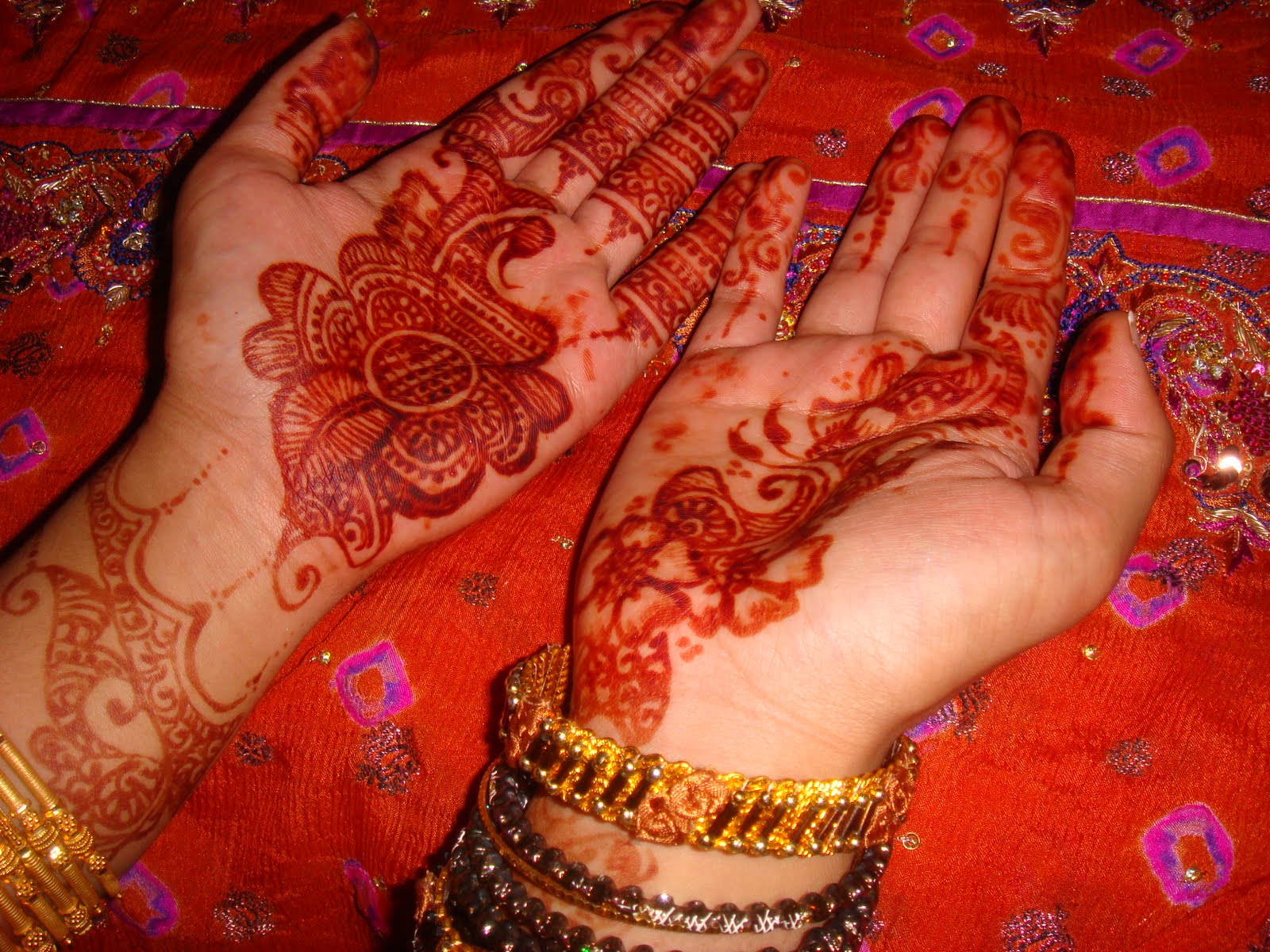

This past Sunday was Eid-ul-Fitr, the celebration which marks the end of Ramadan (the one month period of fasting in the Muslim faith). Our preparations for this course began much sooner than the actual start of the semester, with a unique first meeting. Our first official gathering took place not in a typical classroom but the elegant home of our gracious host Dr. Irvin D. Reid, the former president of Wayne State University. Dr. Reid arranged an elaborate multi-course East African meal for all of us, and this just happened to be the 2nd day of fasting for me. While I did not get to taste what appeared to be a delicious meal, I would like to thank Dr. Reid for his wonderful hospitality and for providing me with scrumptious fruit when the time to break fast rolled around.

Now a bit more about myself: I am a student in the Honors College at Wayne State University in Detroit, Michigan. For as far back as I can remember, I have wanted to be a doctor and I am currently pursuing a pre-med/biological sciences major. Through numerous experiences, it has become increasingly obvious to me that a careeer in medicine is truly what I wish to pursue. When I first learned of the African Democracy Project in Mozambique, I was a bit hesitant because political science is not an area of expertise of mine, and the entire project seemed nothing like any of the courses I had ever taken. But this is exactly why I decided to apply! It goes without saying that I could not be more satisfied with my decision. I am actually really enjoying learning about the various politcal systems around the world-both in theory and practice, and the political situation currently in Mozambique. I would like to take a moment to thank Dr. Reid and Professor Deegan-Krause for seeing my genuine interest and giving me this remarkable oppertunity. While I have traveled to many parts of the world, I have never traveled without my family and been off on my own to explore! I pictured myself embarking on such an ambitious journey much later in life, and yet within a matter of days through this project, it started to become an imediate reality! Stepping outside of the typical academic setting stirs feelings of both fear and excitment, the latter being more prominent and giving me the courage to continue!
So as the name of the course implies, we will be looking at democracy outside of the United States, specifically in Mozambique. Our actual trip to Mozambique will begin prior to the country's elections and our return to the United States will be after the elections have taken place. While I promised myself to have no boundaries and learn all that I can, I would still love to focus on healthcare while in Mozambique. HIV and AIDS is one of the big issues in Mozambique, particulary since the country is borderd by South Africa, which is experiencing one the greatest AIDS epidemics in the world. While elections are a time for the individuals in a country to elect the candidate they feel best represents their views, it is a also a time for the elected officials to step up and take action.
One of my goals with the upcoming election in Mozambique will be to ask former leaders and supporters/members of the two major political parties what they intend to do about the rise of the AIDS epidemic. What sort of actions will have been taken to prevent further incline in the AIDS epidemic, and what plans have failed during the current party's term? To answer these quesitons, I am currently looking into multiple databases to find what sorts of preventative care has been taking place in the country to date. I also feel that it will be important to survey the locals in Mozambique and ask what their government has done to fight the AIDS epidemic and what sorts of plans have been promised by the parties in the upcoming elections.
From a medical standpoint, I feel it is first and foremost important to educate the people of the country about the disease and the various means by which the virus is spread. Preventative care is much more efficient, cost effective, and successful than treatment. In the United States, children are taught about the virus that causes AIDS and safe sex practices from as early as on as grade school. I want to know how people in Mozambique, children and adults, are being approached about this sensitive issue. It is the job of the government to make its citizens aware of the dangers of this particular virus and to help them understand what it is and how the spread of HIV can be all together avoided. While I have plenty of reading and understanding to do regarding AIDS in Mozambique before I actually travel, I think this an issue worthwhile exploring.
Depending on the concerns of my group members and time, I also want to look into how the running candidates plan to handle the problems dealing with access to healthcare in Mozambique. One of the most basic problems is access to healthcare facilities due to poor road conditions and seasonal floods. Also many facilities lack basic testing equipment, even proper waste disposal and/or water. I think that these issues can and need to be part of the budget plan of the incoming candidates. I look forward to working with my group members and hopefully in some shape or form being able to contribute to better overall health in Mozambique.
Subscribe to:
Posts (Atom)